Stemless gentian Gentiana acaulis
Stemless gentian (Gentiana acaulis) is an evergreen perennial flowering plant in the Gentianaceae family, native to Alps, Pyrenees and Carpathians (alpine turf, 1,200–3,000 m). It grows 5–10 cm (2–4 in) tall and 20–30 cm (8–12 in) wide, wants full sun and moderate water, and is hardy to about -30 °C (-22 °F). Space plants about 20 cm (8 in) apart.
Plan Stemless gentian in your garden →
Free. Draw your beds, then watch it grow through the year in 2D and 3D.
Stemless gentian at a glance
| Type | Perennial flowering plant, evergreen |
|---|---|
| Family | Gentianaceae |
| Mature height | 5–10 cm (2–4 in) |
| Mature spread | 20–30 cm (8–12 in) |
| Spacing | 20 cm (8 in) centre to centre |
| Sun | Full sun, at least 5 h of direct sun a day |
| Water | Moderate; drought tolerance low, waterlogging tolerance none |
| Soil pH | 5–7.5 |
| Cold hardiness | About -30 °C (-22 °F) once established (roughly USDA zone 4) |
| Heat stress | Likely above about 28 °C (82 °F) |
| Flowering | from about April for 4–6 weeks (northern hemisphere; later in cold climates, earlier in warm ones) |
| Wind tolerance | High |
| Pollinator value | Moderate |
| Edible | Not grown as food |
| Native to | Alps, Pyrenees and Carpathians (alpine turf, 1,200–3,000 m) |
| Common in gardens of | 🇫🇷 France, 🇩🇪 Germany, 🇬🇧 United Kingdom |
Is Stemless gentian toxic?
- People: mildly toxic
- Cats: not well documented
- Dogs: not well documented
- Parts: roots
Gentian roots are intensely bitter; large amounts cause stomach upset.
If a child or pet may have eaten part of a plant, call a poison centre or vet straight away.
Companion planting: what to grow with Stemless gentian
No well-documented helpful pairing. Group it with plants that like full sun and moderate water.
See Stemless gentian in a botanical garden
It grows in these sample gardens, which you can walk through in 3D:
- Brooklyn Botanic Garden (6 plants)
- Arctic-Alpine Botanic Garden (24 plants)
- Denver Botanic Gardens (12 plants)
- New York Botanical Garden (12 plants)
- Jardin botanique de Montréal (16 plants)
- Kew: glasshouses and rock garden (14 plants)
Questions about Stemless gentian
- How far apart should I plant Stemless gentian?
- About 20 cm (8 in) apart, centre to centre. A mature plant spreads 20–30 cm (8–12 in).
- Does Stemless gentian need full sun?
- Full sun: at least 5 hours of direct sun a day.
- How much water does Stemless gentian need?
- Moderate water. Drought tolerance is low and waterlogging tolerance none.
- How cold-hardy is Stemless gentian?
- It tolerates about -30 °C (-22 °F) once established, roughly USDA zone 4.
- When does Stemless gentian flower?
- From about April for 4–6 weeks (northern hemisphere; later in cold climates, earlier in warm ones).
- Is Stemless gentian poisonous to cats and dogs?
- For cats it is not well documented; for dogs not well documented; for people mildly toxic. Gentian roots are intensely bitter; large amounts cause stomach upset.
- What grows well with Stemless gentian?
- There is no well-documented companion pairing for Stemless gentian. Group it with plants that like the same sun (full sun) and water (moderate).
Sources and evidence
Evidence grade B (B: extension service or peer-reviewed).
- RHS Plant Finder, Royal Horticultural Society
- Plants of the World Online (taxonomy, native range), Royal Botanic Gardens, Kew
- Kew Gardens: Palm House, Temperate House, Rock Garden and Mediterranean Garden, Royal Botanic Gardens, Kew
Notes and assumptions
- Alpine: needs sharp drainage (scree, gravel or a rock-garden pocket) and resents winter wet more than cold.
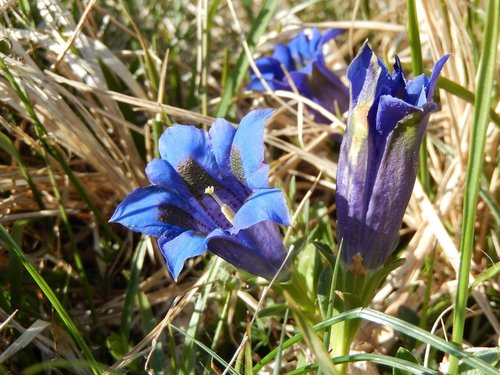
- Huge upturned deep-blue trumpets on a low mat; famously shy to flower in rich soil.
Reference values for planning, not horticultural, veterinary or medical advice. Varieties, soils and local climates differ: check with a local nursery or extension service.
Related plants
- Tembusu Cyrtophyllum fragrans
- Spring gentian Gentiana verna
- Autumn gentian (Chinese gentian) Gentiana sino-ornata
- Great yellow gentian Gentiana lutea
- Willow gentian Gentiana asclepiadea
- Lisianthus (prairie gentian) Eustoma russellianum
- Sunflower Helianthus annuus
- French marigold Tagetes patula