Kauri Agathis australis
Kauri (Agathis australis) is an evergreen perennial tree in the Araucariaceae family, native to Northern North Island, New Zealand (endemic). It grows 30–50 m (98–164 ft) tall and 10–20 m (33–66 ft) wide, wants full sun and moderate water, and is hardy to about -3 °C (27 °F). Space plants about 15 m (49 ft) apart.
Plan Kauri in your garden →
Free. Draw your beds, then watch it grow through the year in 2D and 3D.
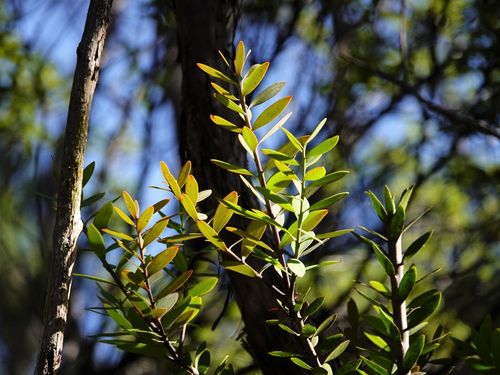
Kauri at a glance
| Type | Perennial tree, evergreen |
|---|---|
| Family | Araucariaceae |
| Mature height | 30–50 m (98–164 ft) |
| Mature spread | 10–20 m (33–66 ft) |
| Spacing | 15 m (49 ft) centre to centre |
| Sun | Full sun, at least 5 h of direct sun a day |
| Water | Moderate; drought tolerance moderate, waterlogging tolerance none |
| Soil pH | 4–6 |
| Cold hardiness | About -3 °C (27 °F) once established (roughly USDA zone 9) |
| Heat stress | Likely above about 32 °C (90 °F) |
| Wind tolerance | Moderate |
| Pollinator value | None |
| Edible | Not grown as food |
| Native to | Northern North Island, New Zealand (endemic) |
| Common in gardens of | 🇳🇿 New Zealand |
Is Kauri toxic?
- People: not known to be toxic
- Cats: not known to be toxic
- Dogs: not known to be toxic
No toxicity reported in ASPCA or standard poison references.
If a child or pet may have eaten part of a plant, call a poison centre or vet straight away.
Companion planting: what to grow with Kauri
No well-documented helpful pairing. Group it with plants that like full sun and moderate water.
Keep apart or take care
- caution With English lavender: Acid-loving plants need pH 4.5–5.5, lavender prefers neutral to alkaline soil; one bed cannot suit both. Evidence B
Questions about Kauri
- How far apart should I plant Kauri?
- About 15 m (49 ft) apart, centre to centre. A mature plant spreads 10–20 m (33–66 ft).
- Does Kauri need full sun?
- Full sun: at least 5 hours of direct sun a day.
- How much water does Kauri need?
- Moderate water. Drought tolerance is moderate and waterlogging tolerance none.
- How cold-hardy is Kauri?
- It tolerates about -3 °C (27 °F) once established, roughly USDA zone 9.
- Is Kauri poisonous to cats and dogs?
- For cats it is not known to be toxic; for dogs not known to be toxic; for people not known to be toxic. No toxicity reported in ASPCA or standard poison references.
- What grows well with Kauri?
- There is no well-documented companion pairing for Kauri. Group it with plants that like the same sun (full sun) and water (moderate).
Sources and evidence
Evidence grade A (A: strong evidence).
- New Zealand Plant Conservation Network: flora, NZPCN
- Flora of New Zealand and Ngā Tipu Whakaoranga (Māori plant use), Manaaki Whenua – Landcare Research
Notes and assumptions
- Tāne Mahuta, the largest living kauri, is about 51 m tall. Threatened by kauri dieback (Phytophthora agathidicida): clean footwear and keep off roots.
Reference values for planning, not horticultural, veterinary or medical advice. Varieties, soils and local climates differ: check with a local nursery or extension service.
Related plants
- Wollemi pine Wollemia nobilis
- Monkey puzzle (pehuén) Araucaria araucana
- Norfolk Island pine Araucaria heterophylla
- Dwarf mountain pine Pinus mugo
- Japanese maple Acer palmatum
- Black walnut Juglans nigra
- English yew Taxus baccata
- Serviceberry Amelanchier canadensis