Whorled heath Erica verticillata
Whorled heath (Erica verticillata) is an evergreen perennial shrub in the Ericaceae family, native to Cape Flats (sand plain fynbos; extinct in the wild). It grows 1–2 m (3.3–6.6 ft) tall and 60 cm–1 m (24 in–3.3 ft) wide, wants full sun and moderate water, and is hardy to about -2 °C (28 °F). Space plants about 80 cm (31 in) apart.
Plan Whorled heath in your garden →
Free. Draw your beds, then watch it grow through the year in 2D and 3D.
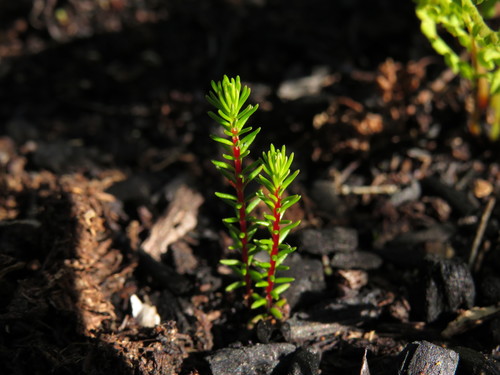
Whorled heath at a glance
| Type | Perennial shrub, evergreen |
|---|---|
| Family | Ericaceae |
| Mature height | 1–2 m (3.3–6.6 ft) |
| Mature spread | 60 cm–1 m (24 in–3.3 ft) |
| Spacing | 80 cm (31 in) centre to centre |
| Sun | Full sun, at least 6 h of direct sun a day |
| Water | Moderate; drought tolerance low, waterlogging tolerance low |
| Soil pH | 4.5–6.5 |
| Cold hardiness | About -2 °C (28 °F) once established (roughly USDA zone 9) |
| Heat stress | Likely above about 32 °C (90 °F) |
| Flowering | from about January for 13–21 weeks (northern hemisphere; later in cold climates, earlier in warm ones) |
| Wind tolerance | Moderate |
| Pollinator value | High |
| Edible | Not grown as food |
| Native to | Cape Flats (sand plain fynbos; extinct in the wild) |
| Common in gardens of | 🇿🇦 South Africa |
Is Whorled heath toxic?
- People: not known to be toxic
- Cats: not known to be toxic
- Dogs: not known to be toxic
No toxicity reported in ASPCA or standard poison references.
If a child or pet may have eaten part of a plant, call a poison centre or vet straight away.
Companion planting: what to grow with Whorled heath
No well-documented helpful pairing. Group it with plants that like full sun and moderate water.
Keep apart or take care
- caution With Mountain laurel: Mountain laurel and rhododendrons are hosts of Phytophthora ramorum (sudden oak death), which spreads from infected foliage between neighbouring plants. Evidence B
- caution With English lavender: Acid-loving plants need pH 4.5–5.5, lavender prefers neutral to alkaline soil; one bed cannot suit both. Evidence B
See Whorled heath in a botanical garden
It grows in this sample garden, which you can walk through in 3D:
- Kirstenbosch (16 plants)
Questions about Whorled heath
- How far apart should I plant Whorled heath?
- About 80 cm (31 in) apart, centre to centre. A mature plant spreads 60 cm–1 m (24 in–3.3 ft).
- Does Whorled heath need full sun?
- Full sun: at least 6 hours of direct sun a day.
- How much water does Whorled heath need?
- Moderate water. Drought tolerance is low and waterlogging tolerance low.
- How cold-hardy is Whorled heath?
- It tolerates about -2 °C (28 °F) once established, roughly USDA zone 9.
- When does Whorled heath flower?
- From about January for 13–21 weeks (northern hemisphere; later in cold climates, earlier in warm ones).
- Is Whorled heath poisonous to cats and dogs?
- For cats it is not known to be toxic; for dogs not known to be toxic; for people not known to be toxic. No toxicity reported in ASPCA or standard poison references.
- What grows well with Whorled heath?
- There is no well-documented companion pairing for Whorled heath. Group it with plants that like the same sun (full sun) and water (moderate).
Sources and evidence
Evidence grade A (A: strong evidence).
- PlantZAfrica, South African National Biodiversity Institute
- Kirstenbosch National Botanical Garden: gardens and collections, South African National Biodiversity Institute (SANBI)
- IUCN Red List of Threatened Species, IUCN
Notes and assumptions
- Fynbos: acid, low-phosphorus, sandy soil; no manure or phosphate fertiliser; needs good air movement and dislikes humid summers.
- Extinct in the wild since the 1940s; rescued from botanical gardens (one plant at Kirstenbosch, others in Kew, Vienna and Belvedere) and reintroduced to the Cape Flats.
Reference values for planning, not horticultural, veterinary or medical advice. Varieties, soils and local climates differ: check with a local nursery or extension service.
Related plants
- Blueberry Vaccinium corymbosum
- Rhododendron Rhododendron
- American cranberry Vaccinium macrocarpon
- Lingonberry Vaccinium vitis-idaea
- Bilberry Vaccinium myrtillus
- Satsuki azalea Rhododendron indicum
- Japanese andromeda (pieris) Pieris japonica
- Heather (ling) Calluna vulgaris