Egusi melon Citrullus mucosospermus
Egusi melon (Citrullus mucosospermus) is an annual vegetable in the Cucurbitaceae family, native to West Africa. It grows 30–50 cm (12–20 in) tall and 2–4 m (6.6–13 ft) wide, wants full sun and low water, and is hardy to about 15 °C (59 °F). Space plants about 1.5 m (4.9 ft) apart.
Plan Egusi melon in your garden →
Free. Draw your beds, then watch it grow through the year in 2D and 3D.
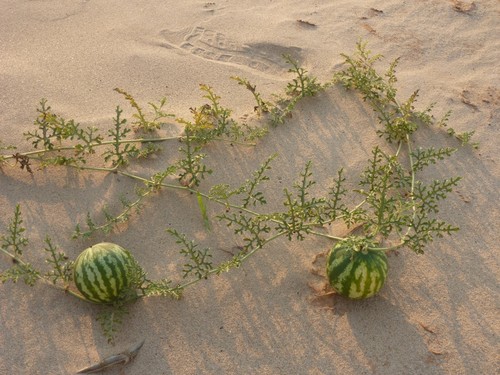
Egusi melon at a glance
| Type | Annual vegetable |
|---|---|
| Family | Cucurbitaceae |
| Mature height | 30–50 cm (12–20 in) |
| Mature spread | 2–4 m (6.6–13 ft) |
| Spacing | 1.5 m (4.9 ft) centre to centre |
| Sun | Full sun, at least 7 h of direct sun a day |
| Water | Low; drought tolerance high, waterlogging tolerance none |
| Soil pH | 5.5–7 |
| Cold hardiness | About 15 °C (59 °F) once established (roughly USDA zone 12) |
| Heat stress | Likely above about 40 °C (104 °F) |
| Flowering | about 6–8 weeks after planting, for 4–7 weeks |
| Days to maturity | About 110 days from planting |
| Wind tolerance | Low |
| Pollinator value | High |
| Edible | Yes: seeds (ground to thicken egusi soup) |
| Native to | West Africa |
| Common in gardens of | 🇳🇬 Nigeria |
Is Egusi melon toxic?
- People: not known to be toxic
- Cats: not known to be toxic
- Dogs: not known to be toxic
Flesh is bitter and not eaten.
If a child or pet may have eaten part of a plant, call a poison centre or vet straight away.
Companion planting: what to grow with Egusi melon
No well-documented helpful pairing. Group it with plants that like full sun and low water.
Keep apart or take care
- caution With Cucurbits (squash family): Cucurbits share powdery mildew, cucumber beetles and mosaic viruses; good airflow and spacing reduce spread. Evidence C
Questions about Egusi melon
- How far apart should I plant Egusi melon?
- About 1.5 m (4.9 ft) apart, centre to centre. A mature plant spreads 2–4 m (6.6–13 ft).
- Does Egusi melon need full sun?
- Full sun: at least 7 hours of direct sun a day.
- How much water does Egusi melon need?
- Low water. Drought tolerance is high and waterlogging tolerance none.
- How cold-hardy is Egusi melon?
- It tolerates about 15 °C (59 °F) once established, roughly USDA zone 12. As an annual it is usually planted out after the last frost.
- When does Egusi melon flower?
- About 6–8 weeks after planting, for 4–7 weeks.
- Is Egusi melon poisonous to cats and dogs?
- For cats it is not known to be toxic; for dogs not known to be toxic; for people not known to be toxic. Flesh is bitter and not eaten.
- What grows well with Egusi melon?
- There is no well-documented companion pairing for Egusi melon. Group it with plants that like the same sun (full sun) and water (low).
Sources and evidence
Evidence grade B (B: extension service or peer-reviewed).
- PROTA4U: Plant Resources of Tropical Africa, PROTA Foundation, Wageningen
- Plants of the World Online (taxonomy, native range), Royal Botanic Gardens, Kew
Notes and assumptions
- A watermelon relative grown only for its oily seeds. Rambles over the ground and smothers weeds.
Reference values for planning, not horticultural, veterinary or medical advice. Varieties, soils and local climates differ: check with a local nursery or extension service.
Related plants
- Cucumber Cucumis sativus
- Zucchini (courgette) Cucurbita pepo
- Pumpkin Cucurbita maxima / C. pepo
- Watermelon Citrullus lanatus
- Muskmelon (cantaloupe) Cucumis melo
- Butternut squash Cucurbita moschata
- Bitter melon Momordica charantia
- Luffa (sponge gourd) Luffa aegyptiaca