Million bells (calibrachoa) Calibrachoa parviflora
Million bells (calibrachoa) (Calibrachoa parviflora) is an annual flowering plant in the Solanaceae family, native to South America (garden hybrids of Brazilian and Argentine species). It grows 10–25 cm (4–10 in) tall and 30–60 cm (12–24 in) wide, wants full sun and moderate water, and is hardy to about 0 °C (32 °F). Space plants about 30 cm (12 in) apart.
Plan Million bells (calibrachoa) in your garden →
Free. Draw your beds, then watch it grow through the year in 2D and 3D.
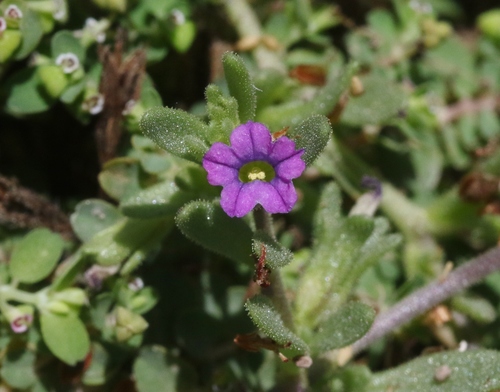
Million bells (calibrachoa) at a glance
| Type | Annual flowering plant |
|---|---|
| Family | Solanaceae |
| Mature height | 10–25 cm (4–10 in) |
| Mature spread | 30–60 cm (12–24 in) |
| Spacing | 30 cm (12 in) centre to centre |
| Sun | Full sun, at least 6 h of direct sun a day |
| Water | Moderate; drought tolerance low, waterlogging tolerance none |
| Soil pH | 5.5–6.2 |
| Cold hardiness | About 0 °C (32 °F) once established (roughly USDA zone 10) |
| Heat stress | Likely above about 35 °C (95 °F) |
| Flowering | about 7–10 weeks after planting, for 14–23 weeks |
| Days to maturity | About 90 days from planting |
| Wind tolerance | Low |
| Pollinator value | Moderate |
| Edible | Not grown as food |
| Native to | South America (garden hybrids of Brazilian and Argentine species) |
| Common in gardens of | 🇺🇸 United States, 🇬🇧 United Kingdom, 🇩🇪 Germany, 🇳🇱 Netherlands, 🇧🇷 Brazil, 🇦🇷 Argentina, 🇯🇵 Japan |
Is Million bells (calibrachoa) toxic?
- People: not known to be toxic
- Cats: not known to be toxic
- Dogs: not known to be toxic
Listed as non-toxic to cats and dogs by the ASPCA.
If a child or pet may have eaten part of a plant, call a poison centre or vet straight away.
Companion planting: what to grow with Million bells (calibrachoa)
No well-documented helpful pairing. Group it with plants that like full sun and moderate water.
Keep apart or take care
- caution With Florence fennel: Fennel releases growth-inhibiting compounds from roots and foliage; lab and garden reports show poorer growth of tomato, pepper and other nearby crops, so keep it in its own corner. Evidence C
- caution With Smoke tree: Smoke tree is very susceptible to Verticillium wilt, which persists in soil after tomato, potato or aubergine crops; avoid planting it where those crops have wilted. Evidence C
- caution With Fennel: Fennel is reported to suppress tomatoes, peppers and many other vegetables nearby; grow it in its own corner. Evidence C
- caution With Nightshades: Nightshades share late blight, early blight, Verticillium wilt and Colorado potato beetle; mix with other families and rotate the bed. Evidence B
- avoid With Potato: Potatoes are the main source of late blight (Phytophthora infestans) that spreads to tomatoes and other nightshades within a few metres. Evidence B
- caution With Sunflower: Sunflower residues and roots release phenolic compounds that can slow nearby seedlings; transplants are less affected. Evidence C
Questions about Million bells (calibrachoa)
- How far apart should I plant Million bells (calibrachoa)?
- About 30 cm (12 in) apart, centre to centre. A mature plant spreads 30–60 cm (12–24 in).
- Does Million bells (calibrachoa) need full sun?
- Full sun: at least 6 hours of direct sun a day.
- How much water does Million bells (calibrachoa) need?
- Moderate water. Drought tolerance is low and waterlogging tolerance none.
- How cold-hardy is Million bells (calibrachoa)?
- It tolerates about 0 °C (32 °F) once established, roughly USDA zone 10. As an annual it is usually planted out after the last frost.
- When does Million bells (calibrachoa) flower?
- About 7–10 weeks after planting, for 14–23 weeks.
- Is Million bells (calibrachoa) poisonous to cats and dogs?
- For cats it is not known to be toxic; for dogs not known to be toxic; for people not known to be toxic. Listed as non-toxic to cats and dogs by the ASPCA.
- What grows well with Million bells (calibrachoa)?
- There is no well-documented companion pairing for Million bells (calibrachoa). Group it with plants that like the same sun (full sun) and water (moderate).
Sources and evidence
Evidence grade B (B: extension service or peer-reviewed).
- Extension Gardener Plant Toolbox, NC State Extension
- RHS Plant Finder, Royal Horticultural Society
Notes and assumptions
- Trailing mini-petunias for baskets and window boxes; needs slightly acid compost or leaves yellow (iron).
Reference values for planning, not horticultural, veterinary or medical advice. Varieties, soils and local climates differ: check with a local nursery or extension service.
Related plants
- Tomato Solanum lycopersicum
- Cherry tomato Solanum lycopersicum var. cerasiforme
- Potato Solanum tuberosum
- Bell pepper Capsicum annuum
- Eggplant (aubergine) Solanum melongena
- Chili pepper Capsicum annuum (hot types)
- Petunia Petunia x hybrida
- Tomatillo Physalis philadelphica