Cabbage Brassica oleracea var. capitata
Cabbage (Brassica oleracea var. capitata) is an annual vegetable in the Brassicaceae family. It grows 30–45 cm (12–18 in) tall and 50–70 cm (20–28 in) wide, wants full sun and moderate water, and is hardy to about -5 °C (23 °F). Space plants about 50 cm (20 in) apart.
Plan Cabbage in your garden →
Free. Draw your beds, then watch it grow through the year in 2D and 3D.
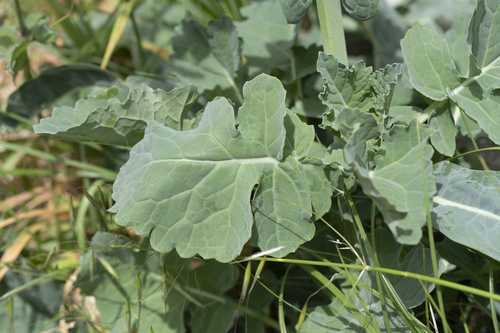
Cabbage at a glance
| Type | Annual vegetable |
|---|---|
| Family | Brassicaceae |
| Mature height | 30–45 cm (12–18 in) |
| Mature spread | 50–70 cm (20–28 in) |
| Spacing | 50 cm (20 in) centre to centre |
| Sun | Full sun, at least 6 h of direct sun a day |
| Water | Moderate; drought tolerance low, waterlogging tolerance none |
| Cold hardiness | About -5 °C (23 °F) once established (roughly USDA zone 9) |
| Heat stress | Likely above about 26 °C (79 °F) |
| Days to maturity | About 95 days from planting |
| Wind tolerance | Low |
| Pollinator value | None |
| Edible | Yes: leaves |
| Common in gardens of | 🇺🇸 United States, 🇬🇧 United Kingdom, 🇨🇳 China, 🇯🇵 Japan, 🇩🇪 Germany, 🇷🇺 Russia, 🇫🇷 France, 🇳🇴 Norway, 🇿🇦 South Africa, 🇧🇷 Brazil, 🇵🇪 Peru, 🇲🇽 Mexico, 🇦🇺 Australia, 🇮🇳 India, 🇵🇹 Portugal, 🇰🇪 Kenya, 🇪🇹 Ethiopia, 🇮🇪 Ireland, 🇵🇱 Poland |
Is Cabbage toxic?
- People: not known to be toxic
- Cats: not known to be toxic
- Dogs: not known to be toxic
Cabbage is non-toxic to people and pets.
If a child or pet may have eaten part of a plant, call a poison centre or vet straight away.
Companion planting: what to grow with Cabbage
Good neighbours
- good With Rhubarb: Traditional lore says rhubarb planted near brassicas helps against clubroot and pests; the evidence is weak and not confirmed by trials. Evidence D
- good With Nasturtium: Nasturtiums act as a trap crop for cabbage white butterflies and blackfly, drawing some pressure away from brassicas. Evidence C
Shared pests and diseases
- Clubroot: Clubroot spores persist in soil up to 20 years; keep brassicas in a rotation. Evidence B
Questions about Cabbage
- How far apart should I plant Cabbage?
- About 50 cm (20 in) apart, centre to centre. A mature plant spreads 50–70 cm (20–28 in).
- Does Cabbage need full sun?
- Full sun: at least 6 hours of direct sun a day.
- How much water does Cabbage need?
- Moderate water. Drought tolerance is low and waterlogging tolerance none.
- How cold-hardy is Cabbage?
- It tolerates about -5 °C (23 °F) once established, roughly USDA zone 9. As an annual it is usually planted out after the last frost.
- Is Cabbage poisonous to cats and dogs?
- For cats it is not known to be toxic; for dogs not known to be toxic; for people not known to be toxic. Cabbage is non-toxic to people and pets.
- What grows well with Cabbage?
- Traditional lore says rhubarb planted near brassicas helps against clubroot and pests; the evidence is weak and not confirmed by trials. Nasturtiums act as a trap crop for cabbage white butterflies and blackfly, drawing some pressure away from brassicas.
Sources and evidence
Evidence grade C (C: plausible, mixed evidence).
- ASPCA Toxic and Non-Toxic Plant List, ASPCA
- FAO Irrigation and Drainage Paper 56 — Crop Evapotranspiration, FAO
- RHS Plant Finder, Royal Horticultural Society
- University extension gardening guides (general), Various land-grant university extensions
Notes and assumptions
- Typical garden-cultivar values; varieties differ.
- Grown for the head; flowers only in the second year.
Reference values for planning, not horticultural, veterinary or medical advice. Varieties, soils and local climates differ: check with a local nursery or extension service.
Related plants
- Broccoli Brassica oleracea var. italica
- Cauliflower Brassica oleracea var. botrytis
- Kale Brassica oleracea var. sabellica
- Radish Raphanus sativus
- Bok choy Brassica rapa subsp. chinensis
- Brussels sprout Brassica oleracea var. gemmifera
- Kohlrabi Brassica oleracea var. gongylodes
- Collard greens Brassica oleracea var. viridis