Bishop’s flower (false Queen Anne’s lace) Ammi majus
Bishop’s flower (false Queen Anne’s lace) (Ammi majus) is an annual flowering plant in the Apiaceae family, native to Nile valley, the Mediterranean and western Asia. It grows 90 cm–1.4 m (35 in–4.6 ft) tall and 30–45 cm (12–18 in) wide, wants full sun and moderate water, and is hardy to about -8 °C (18 °F). Space plants about 35 cm (14 in) apart.
Plan Bishop’s flower (false Queen Anne’s lace) in your garden →
Free. Draw your beds, then watch it grow through the year in 2D and 3D.
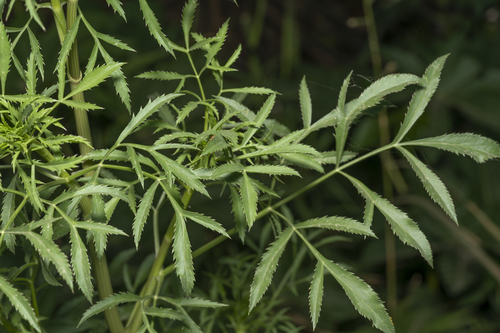
Bishop’s flower (false Queen Anne’s lace) at a glance
| Type | Annual flowering plant |
|---|---|
| Family | Apiaceae |
| Mature height | 90 cm–1.4 m (35 in–4.6 ft) |
| Mature spread | 30–45 cm (12–18 in) |
| Spacing | 35 cm (14 in) centre to centre |
| Sun | Full sun, at least 6 h of direct sun a day |
| Water | Moderate; drought tolerance low, waterlogging tolerance none |
| Soil pH | 6–8 |
| Cold hardiness | About -8 °C (18 °F) once established (roughly USDA zone 8) |
| Heat stress | Likely above about 32 °C (90 °F) |
| Flowering | about 12–16 weeks after planting, for 5–8 weeks |
| Days to maturity | About 120 days from planting |
| Wind tolerance | Low |
| Pollinator value | High |
| Edible | Not grown as food |
| Native to | Nile valley, the Mediterranean and western Asia |
| Common in gardens of | 🇬🇧 United Kingdom, 🇮🇪 Ireland, 🇳🇱 Netherlands, 🇫🇷 France, 🇪🇬 Egypt, 🇺🇸 United States, 🇦🇺 Australia |
Is Bishop’s flower (false Queen Anne’s lace) toxic?
- People: moderately toxic
- Cats: not well documented
- Dogs: not well documented
- Parts: sap, seeds
Contains furanocoumarins: sap on skin in sunlight can cause blisters (phytophotodermatitis), so wear gloves and long sleeves when cutting it. Harmful if eaten.
If a child or pet may have eaten part of a plant, call a poison centre or vet straight away.
Companion planting: what to grow with Bishop’s flower (false Queen Anne’s lace)
No well-documented helpful pairing. Group it with plants that like full sun and moderate water.
Questions about Bishop’s flower (false Queen Anne’s lace)
- How far apart should I plant Bishop’s flower (false Queen Anne’s lace)?
- About 35 cm (14 in) apart, centre to centre. A mature plant spreads 30–45 cm (12–18 in).
- Does Bishop’s flower (false Queen Anne’s lace) need full sun?
- Full sun: at least 6 hours of direct sun a day.
- How much water does Bishop’s flower (false Queen Anne’s lace) need?
- Moderate water. Drought tolerance is low and waterlogging tolerance none.
- How cold-hardy is Bishop’s flower (false Queen Anne’s lace)?
- It tolerates about -8 °C (18 °F) once established, roughly USDA zone 8. As an annual it is usually planted out after the last frost.
- When does Bishop’s flower (false Queen Anne’s lace) flower?
- About 12–16 weeks after planting, for 5–8 weeks.
- Is Bishop’s flower (false Queen Anne’s lace) poisonous to cats and dogs?
- For cats it is not well documented; for dogs not well documented; for people moderately toxic. Contains furanocoumarins: sap on skin in sunlight can cause blisters (phytophotodermatitis), so wear gloves and long sleeves when cutting it. Harmful if eaten.
- What grows well with Bishop’s flower (false Queen Anne’s lace)?
- There is no well-documented companion pairing for Bishop’s flower (false Queen Anne’s lace). Group it with plants that like the same sun (full sun) and water (moderate).
Sources and evidence
Evidence grade A (A: strong evidence).
- Plants of the World Online (taxonomy, native range), Royal Botanic Gardens, Kew
- RHS Find a Plant (plant profiles and growing guides), Royal Horticultural Society
- CABI Invasive Species Compendium, CABI
Notes and assumptions
- A hardy annual: sow where it is to flower in autumn or early spring, thin the seedlings, and let some plants set seed.
- A cutting-patch flower: picking the stems often keeps new ones coming.
- Lacy white umbels on tall stems: a florists’ favourite and a loved filler in a cottage border, attracting hoverflies. Its furanocoumarins were the original source of the drug methoxsalen.
Reference values for planning, not horticultural, veterinary or medical advice. Varieties, soils and local climates differ: check with a local nursery or extension service.
Related plants
- Carrot Daucus carota subsp. sativus
- Parsley Petroselinum crispum
- Celery Apium graveolens
- Coriander (cilantro) Coriandrum sativum
- Dill Anethum graveolens
- Parsnip Pastinaca sativa
- Celeriac Apium graveolens var. rapaceum
- Florence fennel Foeniculum vulgare var. azoricum