Ylang-ylang Cananga odorata
Ylang-ylang (Cananga odorata) is an evergreen perennial tree in the Annonaceae family, native to Philippines and Indonesia to northern Australia. It grows 10–20 m (33–66 ft) tall and 5–8 m (16–26 ft) wide, wants full sun and high water, and is hardy to about 10 °C (50 °F). Space plants about 6 m (20 ft) apart.
Plan Ylang-ylang in your garden →
Free. Draw your beds, then watch it grow through the year in 2D and 3D.
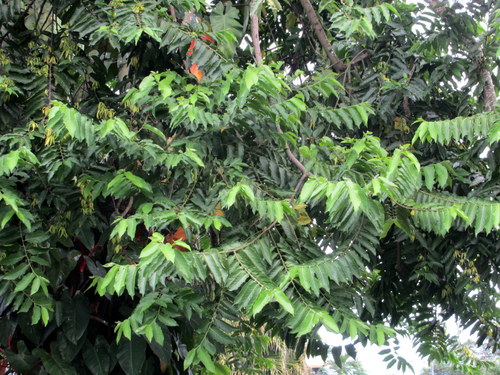
Ylang-ylang at a glance
| Type | Perennial tree, evergreen |
|---|---|
| Family | Annonaceae |
| Mature height | 10–20 m (33–66 ft) |
| Mature spread | 5–8 m (16–26 ft) |
| Spacing | 6 m (20 ft) centre to centre |
| Sun | Full sun, at least 5 h of direct sun a day |
| Water | High; drought tolerance low, waterlogging tolerance none |
| Soil pH | 5–7 |
| Cold hardiness | About 10 °C (50 °F) once established (roughly USDA zone 12) |
| Heat stress | Likely above about 38 °C (100 °F) |
| Flowering | about 104–156 weeks after planting, for 29–47 weeks |
| Wind tolerance | Low |
| Pollinator value | Moderate |
| Edible | Not grown as food |
| Native to | Philippines and Indonesia to northern Australia |
| Common in gardens of | 🇵🇭 Philippines, 🇮🇩 Indonesia, 🇲🇾 Malaysia, 🇹🇭 Thailand, 🇸🇬 Singapore |
Is Ylang-ylang toxic?
- People: not known to be toxic
- Cats: not known to be toxic
- Dogs: not known to be toxic
No toxicity reported in ASPCA or standard poison references.
If a child or pet may have eaten part of a plant, call a poison centre or vet straight away.
Companion planting: what to grow with Ylang-ylang
No well-documented helpful pairing. Group it with plants that like full sun and high water.
Questions about Ylang-ylang
- How far apart should I plant Ylang-ylang?
- About 6 m (20 ft) apart, centre to centre. A mature plant spreads 5–8 m (16–26 ft).
- Does Ylang-ylang need full sun?
- Full sun: at least 5 hours of direct sun a day.
- How much water does Ylang-ylang need?
- High water. Drought tolerance is low and waterlogging tolerance none.
- How cold-hardy is Ylang-ylang?
- It tolerates about 10 °C (50 °F) once established, roughly USDA zone 12.
- When does Ylang-ylang flower?
- About 104–156 weeks after planting, for 29–47 weeks.
- Is Ylang-ylang poisonous to cats and dogs?
- For cats it is not known to be toxic; for dogs not known to be toxic; for people not known to be toxic. No toxicity reported in ASPCA or standard poison references.
- What grows well with Ylang-ylang?
- There is no well-documented companion pairing for Ylang-ylang. Group it with plants that like the same sun (full sun) and water (high).
Sources and evidence
Evidence grade B (B: extension service or peer-reviewed).
- PROSEA: Plant Resources of South-East Asia, PROSEA Foundation, Bogor
- Flora & Fauna Web, National Parks Board, Singapore
Notes and assumptions
- Drooping, strappy greenish-yellow flowers with an intense scent (an ingredient of Chanel No. 5). Often pruned low for picking.
Reference values for planning, not horticultural, veterinary or medical advice. Varieties, soils and local climates differ: check with a local nursery or extension service.
Related plants
- Pawpaw Asimina triloba
- Cherimoya Annona cherimola
- Soursop (guanábana) Annona muricata
- Sugar apple (sweetsop) Annona squamosa
- Custard apple (bullock’s heart) Annona reticulata
- Climbing ylang-ylang (karawek) Artabotrys hexapetalus
- Grains of Selim (Ethiopian pepper, uda) Xylopia aethiopica
- Wild custard apple (African custard apple) Annona senegalensis