Shea tree Vitellaria paradoxa
Shea tree (Vitellaria paradoxa) is a deciduous perennial tree in the Sapotaceae family, native to Sudano-Sahelian savanna from Senegal to Uganda. It grows 7–15 m (23–49 ft) tall and 6–12 m (20–39 ft) wide, wants full sun and low water, and is hardy to about 5 °C (41 °F). Space plants about 10 m (33 ft) apart.
Plan Shea tree in your garden →
Free. Draw your beds, then watch it grow through the year in 2D and 3D.
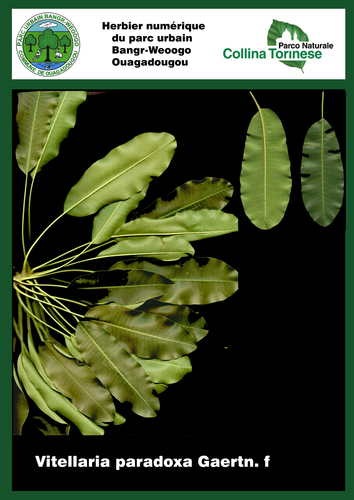
Shea tree at a glance
| Type | Perennial tree, deciduous |
|---|---|
| Family | Sapotaceae |
| Mature height | 7–15 m (23–49 ft) |
| Mature spread | 6–12 m (20–39 ft) |
| Spacing | 10 m (33 ft) centre to centre |
| Sun | Full sun, at least 8 h of direct sun a day |
| Water | Low; drought tolerance high, waterlogging tolerance none |
| Soil pH | 5–7.5 |
| Cold hardiness | About 5 °C (41 °F) once established (roughly USDA zone 11) |
| Heat stress | Likely above about 45 °C (113 °F) |
| Flowering | from about January for 4–9 weeks (northern hemisphere; later in cold climates, earlier in warm ones) |
| Wind tolerance | Moderate |
| Pollinator value | High |
| Edible | Yes: fruit pulp, kernels (shea butter) |
| Native to | Sudano-Sahelian savanna from Senegal to Uganda |
| Common in gardens of | 🇳🇬 Nigeria |
Is Shea tree toxic?
- People: not known to be toxic
- Cats: not known to be toxic
- Dogs: not known to be toxic
No toxicity reported in ASPCA or standard poison references.
If a child or pet may have eaten part of a plant, call a poison centre or vet straight away.
Companion planting: what to grow with Shea tree
No well-documented helpful pairing. Group it with plants that like full sun and low water.
Questions about Shea tree
- How far apart should I plant Shea tree?
- About 10 m (33 ft) apart, centre to centre. A mature plant spreads 6–12 m (20–39 ft).
- Does Shea tree need full sun?
- Full sun: at least 8 hours of direct sun a day.
- How much water does Shea tree need?
- Low water. Drought tolerance is high and waterlogging tolerance none.
- How cold-hardy is Shea tree?
- It tolerates about 5 °C (41 °F) once established, roughly USDA zone 11.
- When does Shea tree flower?
- From about January for 4–9 weeks (northern hemisphere; later in cold climates, earlier in warm ones).
- Is Shea tree poisonous to cats and dogs?
- For cats it is not known to be toxic; for dogs not known to be toxic; for people not known to be toxic. No toxicity reported in ASPCA or standard poison references.
- What grows well with Shea tree?
- There is no well-documented companion pairing for Shea tree. Group it with plants that like the same sun (full sun) and water (low).
Sources and evidence
Evidence grade B (B: extension service or peer-reviewed).
- PROTA4U: Plant Resources of Tropical Africa, PROTA Foundation, Wageningen
- IUCN Red List of Threatened Species, IUCN
Notes and assumptions
- Very slow to bear (often 15–20 years). Thick corky bark survives savanna fires. Vulnerable on the IUCN Red List.
Reference values for planning, not horticultural, veterinary or medical advice. Varieties, soils and local climates differ: check with a local nursery or extension service.
Related plants
- Lúcuma Pouteria lucuma
- Argan tree Sideroxylon spinosum
- Sapodilla (chico, lamut) Manilkara zapota
- Star apple (caimito) Chrysophyllum cainito
- Spanish cherry (bullet wood, phikun) Mimusops elengi
- Mamey sapote Pouteria sapota
- Abiu Pouteria caimito
- African star apple (agbalumo, udara) Gambeya albida