Santol Sandoricum koetjape
Santol (Sandoricum koetjape) is an evergreen perennial fruit plant in the Meliaceae family, native to Indochina and western Malesia. It grows 15–30 m (49–98 ft) tall and 8–15 m (26–49 ft) wide, wants full sun and moderate water, and is hardy to about 8 °C (46 °F). Space plants about 10 m (33 ft) apart.
Plan Santol in your garden →
Free. Draw your beds, then watch it grow through the year in 2D and 3D.
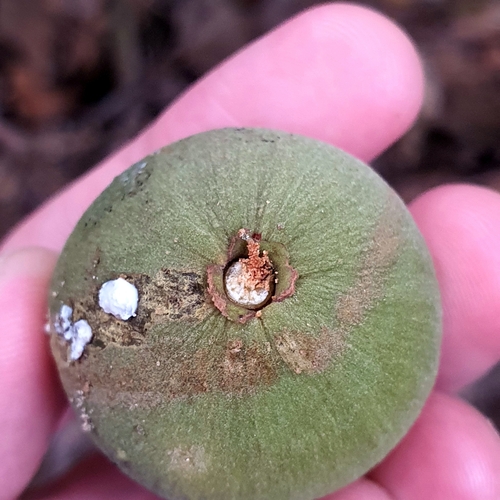
Santol at a glance
| Type | Perennial fruit plant, evergreen |
|---|---|
| Family | Meliaceae |
| Mature height | 15–30 m (49–98 ft) |
| Mature spread | 8–15 m (26–49 ft) |
| Spacing | 10 m (33 ft) centre to centre |
| Sun | Full sun, at least 6 h of direct sun a day |
| Water | Moderate; drought tolerance low, waterlogging tolerance low |
| Soil pH | 5.5–7 |
| Cold hardiness | About 8 °C (46 °F) once established (roughly USDA zone 11) |
| Heat stress | Likely above about 38 °C (100 °F) |
| Flowering | about 261–365 weeks after planting, for 4–7 weeks |
| Wind tolerance | Low |
| Pollinator value | Moderate |
| Edible | Yes: fruit pulp and rind (sour-sweet) |
| Native to | Indochina and western Malesia |
| Common in gardens of | 🇵🇭 Philippines, 🇹🇭 Thailand, 🇲🇾 Malaysia, 🇮🇩 Indonesia, 🇻🇳 Vietnam |
Is Santol toxic?
- People: not known to be toxic
- Cats: not known to be toxic
- Dogs: not known to be toxic
Large seeds have caused fatal bowel obstruction when swallowed whole.
If a child or pet may have eaten part of a plant, call a poison centre or vet straight away.
Companion planting: what to grow with Santol
No well-documented helpful pairing. Group it with plants that like full sun and moderate water.
Questions about Santol
- How far apart should I plant Santol?
- About 10 m (33 ft) apart, centre to centre. A mature plant spreads 8–15 m (26–49 ft).
- Does Santol need full sun?
- Full sun: at least 6 hours of direct sun a day.
- How much water does Santol need?
- Moderate water. Drought tolerance is low and waterlogging tolerance low.
- How cold-hardy is Santol?
- It tolerates about 8 °C (46 °F) once established, roughly USDA zone 11.
- When does Santol flower?
- About 261–365 weeks after planting, for 4–7 weeks.
- Is Santol poisonous to cats and dogs?
- For cats it is not known to be toxic; for dogs not known to be toxic; for people not known to be toxic. Large seeds have caused fatal bowel obstruction when swallowed whole.
- What grows well with Santol?
- There is no well-documented companion pairing for Santol. Group it with plants that like the same sun (full sun) and water (moderate).
Sources and evidence
Evidence grade B (B: extension service or peer-reviewed).
- PROSEA: Plant Resources of South-East Asia, PROSEA Foundation, Bogor
- UF/IFAS Extension tropical and subtropical fruit and landscape publications, University of Florida
Notes and assumptions
- Leaves turn red before falling; the rind is candied and cooked in sinigang soup.
Reference values for planning, not horticultural, veterinary or medical advice. Varieties, soils and local climates differ: check with a local nursery or extension service.
Related plants
- Big-leaf mahogany Swietenia macrophylla
- Neem Azadirachta indica
- Chinaberry (Persian lilac) Melia azedarach
- Langsat (duku) Lansium parasiticum
- Chinese perfume plant (mock lime, prayong) Aglaia odorata
- Dry-zone mahogany (Senegal mahogany, caïlcédrat) Khaya senegalensis
- Strawberry Fragaria x ananassa
- Blueberry Vaccinium corymbosum