Soapbark tree (quillay) Quillaja saponaria
Soapbark tree (quillay) (Quillaja saponaria) is an evergreen perennial tree in the Quillajaceae family, native to Central Chile (endemic). It grows 8–15 m (26–49 ft) tall and 5–8 m (16–26 ft) wide, wants full sun and low water, and is hardy to about -10 °C (14 °F). Space plants about 6 m (20 ft) apart.
Plan Soapbark tree (quillay) in your garden →
Free. Draw your beds, then watch it grow through the year in 2D and 3D.
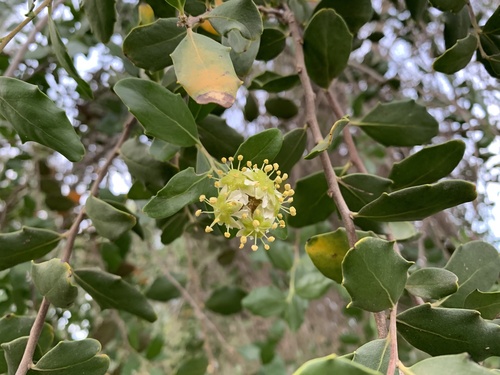
Soapbark tree (quillay) at a glance
| Type | Perennial tree, evergreen |
|---|---|
| Family | Quillajaceae |
| Mature height | 8–15 m (26–49 ft) |
| Mature spread | 5–8 m (16–26 ft) |
| Spacing | 6 m (20 ft) centre to centre |
| Sun | Full sun, at least 6 h of direct sun a day |
| Water | Low; drought tolerance high, waterlogging tolerance none |
| Soil pH | 5.5–8 |
| Cold hardiness | About -10 °C (14 °F) once established (roughly USDA zone 8) |
| Heat stress | Likely above about 38 °C (100 °F) |
| Flowering | from about October for 4–7 weeks (northern hemisphere; later in cold climates, earlier in warm ones) |
| Wind tolerance | Moderate |
| Pollinator value | High |
| Edible | Not grown as food |
| Native to | Central Chile (endemic) |
| Common in gardens of | 🇨🇱 Chile, 🇺🇸 United States |
Is Soapbark tree (quillay) toxic?
- People: mildly toxic
- Cats: mildly toxic
- Dogs: mildly toxic
- Parts: bark
Bark saponins irritate the gut if taken in quantity.
If a child or pet may have eaten part of a plant, call a poison centre or vet straight away.
Companion planting: what to grow with Soapbark tree (quillay)
No well-documented helpful pairing. Group it with plants that like full sun and low water.
Questions about Soapbark tree (quillay)
- How far apart should I plant Soapbark tree (quillay)?
- About 6 m (20 ft) apart, centre to centre. A mature plant spreads 5–8 m (16–26 ft).
- Does Soapbark tree (quillay) need full sun?
- Full sun: at least 6 hours of direct sun a day.
- How much water does Soapbark tree (quillay) need?
- Low water. Drought tolerance is high and waterlogging tolerance none.
- How cold-hardy is Soapbark tree (quillay)?
- It tolerates about -10 °C (14 °F) once established, roughly USDA zone 8.
- When does Soapbark tree (quillay) flower?
- From about October for 4–7 weeks (northern hemisphere; later in cold climates, earlier in warm ones).
- Is Soapbark tree (quillay) poisonous to cats and dogs?
- For cats it is mildly toxic; for dogs mildly toxic; for people mildly toxic. Bark saponins irritate the gut if taken in quantity.
- What grows well with Soapbark tree (quillay)?
- There is no well-documented companion pairing for Soapbark tree (quillay). Group it with plants that like the same sun (full sun) and water (low).
Sources and evidence
Evidence grade B (B: extension service or peer-reviewed).
- Plants of the World Online (taxonomy, native range), Royal Botanic Gardens, Kew
- Calscape: California native plants, California Native Plant Society
Notes and assumptions
- Glossy evergreen that resprouts after fire; bark saponins foam in water and were used as soap and are now in vaccine adjuvants.
Reference values for planning, not horticultural, veterinary or medical advice. Varieties, soils and local climates differ: check with a local nursery or extension service.
Related plants
- Dwarf mountain pine Pinus mugo
- Japanese maple Acer palmatum
- Black walnut Juglans nigra
- English yew Taxus baccata
- Serviceberry Amelanchier canadensis
- Japanese flowering cherry Prunus serrulata
- Saucer magnolia Magnolia x soulangeana
- Silver birch Betula pendula