Clove Syzygium aromaticum
Clove (Syzygium aromaticum) is an evergreen perennial tree in the Myrtaceae family, native to North Moluccas (Indonesia). It grows 8–12 m (26–39 ft) tall and 4–7 m (13–23 ft) wide, wants part sun to part shade and high water, and is hardy to about 15 °C (59 °F). Space plants about 6 m (20 ft) apart.
Plan Clove in your garden →
Free. Draw your beds, then watch it grow through the year in 2D and 3D.
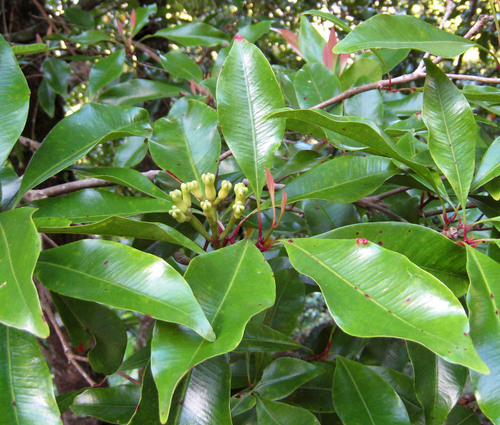
Clove at a glance
| Type | Perennial tree, evergreen |
|---|---|
| Family | Myrtaceae |
| Mature height | 8–12 m (26–39 ft) |
| Mature spread | 4–7 m (13–23 ft) |
| Spacing | 6 m (20 ft) centre to centre |
| Sun | Part sun to part shade, at least 4 h of direct sun a day |
| Water | High; drought tolerance none, waterlogging tolerance none |
| Soil pH | 5–6.5 |
| Cold hardiness | About 15 °C (59 °F) once established (roughly USDA zone 12) |
| Heat stress | Likely above about 35 °C (95 °F) |
| Flowering | about 261–417 weeks after planting, for 4–9 weeks |
| Wind tolerance | Low |
| Pollinator value | Moderate |
| Edible | Yes: dried flower buds (cloves) |
| Native to | North Moluccas (Indonesia) |
| Common in gardens of | 🇮🇩 Indonesia, 🇲🇾 Malaysia, 🇮🇳 India |
Is Clove toxic?
- People: mildly toxic
- Cats: moderately toxic
- Dogs: moderately toxic
- Parts: oil
Clove oil (eugenol) is toxic to cats and harmful to children in concentrated form.
If a child or pet may have eaten part of a plant, call a poison centre or vet straight away.
Companion planting: what to grow with Clove
No well-documented helpful pairing. Group it with plants that like part sun to part shade and high water.
Keep apart or take care
- caution With Guava: Myrtle rust (Austropuccinia psidii) infects guava, feijoa, Surinam cherry and many other Myrtaceae; it spreads by airborne spores between them. Evidence B
Questions about Clove
- How far apart should I plant Clove?
- About 6 m (20 ft) apart, centre to centre. A mature plant spreads 4–7 m (13–23 ft).
- Does Clove need full sun?
- Part sun to part shade: at least 4 hours of direct sun a day.
- How much water does Clove need?
- High water. Drought tolerance is none and waterlogging tolerance none.
- How cold-hardy is Clove?
- It tolerates about 15 °C (59 °F) once established, roughly USDA zone 12.
- When does Clove flower?
- About 261–417 weeks after planting, for 4–9 weeks.
- Is Clove poisonous to cats and dogs?
- For cats it is moderately toxic; for dogs moderately toxic; for people mildly toxic. Clove oil (eugenol) is toxic to cats and harmful to children in concentrated form.
- What grows well with Clove?
- There is no well-documented companion pairing for Clove. Group it with plants that like the same sun (part sun to part shade) and water (high).
Sources and evidence
Evidence grade B (B: extension service or peer-reviewed).
- PROSEA: Plant Resources of South-East Asia, PROSEA Foundation, Bogor
- Plants of the World Online (taxonomy, native range), Royal Botanic Gardens, Kew
Notes and assumptions
- Buds are picked pink just before opening and sun-dried. Indonesia also smokes most of its harvest in kretek cigarettes.
Reference values for planning, not horticultural, veterinary or medical advice. Varieties, soils and local climates differ: check with a local nursery or extension service.
Related plants
- Lemon myrtle Backhousia citriodora
- Guava Psidium guajava
- Feijoa Acca sellowiana
- Surinam cherry (pitanga) Eugenia uniflora
- Cider gum (eucalyptus) Eucalyptus gunnii
- Lilly pilly Syzygium smithii
- Crimson bottlebrush Melaleuca citrina
- Mānuka (tea tree) Leptospermum scoparium