Chinese water chestnut (mǎtí) Eleocharis dulcis
Chinese water chestnut (mǎtí) (Eleocharis dulcis) is a deciduous perennial vegetable in the Cyperaceae family, native to Tropical and subtropical Asia, Africa, Australia and Pacific islands. It grows 80 cm–1.5 m (31 in–4.9 ft) tall and 30–50 cm (12–20 in) wide, wants full sun and high water, and is hardy to about 0 °C (32 °F). Space plants about 50 cm (20 in) apart.
Plan Chinese water chestnut (mǎtí) in your garden →
Free. Draw your beds, then watch it grow through the year in 2D and 3D.
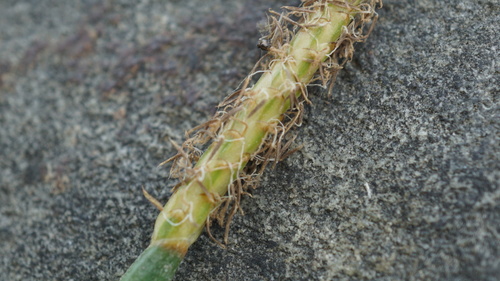
Chinese water chestnut (mǎtí) at a glance
| Type | Perennial vegetable, deciduous |
|---|---|
| Family | Cyperaceae |
| Mature height | 80 cm–1.5 m (31 in–4.9 ft) |
| Mature spread | 30–50 cm (12–20 in) |
| Spacing | 50 cm (20 in) centre to centre |
| Sun | Full sun, at least 7 h of direct sun a day |
| Water | High; drought tolerance none, waterlogging tolerance high |
| Soil pH | 6–7 |
| Cold hardiness | About 0 °C (32 °F) once established (roughly USDA zone 10) |
| Heat stress | Likely above about 38 °C (100 °F) |
| Flowering | about 14–21 weeks after planting, for 3–6 weeks |
| Wind tolerance | Low |
| Pollinator value | None |
| Edible | Yes: corms (crisp, raw or cooked) |
| Native to | Tropical and subtropical Asia, Africa, Australia and Pacific islands |
| Common in gardens of | 🇨🇳 China, 🇻🇳 Vietnam, 🇹🇭 Thailand, 🇮🇳 India, 🇮🇩 Indonesia, 🇵🇭 Philippines, 🇦🇺 Australia, 🇺🇸 United States |
Is Chinese water chestnut (mǎtí) toxic?
- People: not known to be toxic
- Cats: not known to be toxic
- Dogs: not known to be toxic
Not poisonous. Peel and wash corms grown in ponds well, or cook them, as they can carry an intestinal fluke (Fasciolopsis).
If a child or pet may have eaten part of a plant, call a poison centre or vet straight away.
Companion planting: what to grow with Chinese water chestnut (mǎtí)
No well-documented helpful pairing. Group it with plants that like full sun and high water.
Questions about Chinese water chestnut (mǎtí)
- How far apart should I plant Chinese water chestnut (mǎtí)?
- About 50 cm (20 in) apart, centre to centre. A mature plant spreads 30–50 cm (12–20 in).
- Does Chinese water chestnut (mǎtí) need full sun?
- Full sun: at least 7 hours of direct sun a day.
- How much water does Chinese water chestnut (mǎtí) need?
- High water. Drought tolerance is none and waterlogging tolerance high.
- How cold-hardy is Chinese water chestnut (mǎtí)?
- It tolerates about 0 °C (32 °F) once established, roughly USDA zone 10.
- When does Chinese water chestnut (mǎtí) flower?
- About 14–21 weeks after planting, for 3–6 weeks.
- Is Chinese water chestnut (mǎtí) poisonous to cats and dogs?
- For cats it is not known to be toxic; for dogs not known to be toxic; for people not known to be toxic. Not poisonous. Peel and wash corms grown in ponds well, or cook them, as they can carry an intestinal fluke (Fasciolopsis).
- What grows well with Chinese water chestnut (mǎtí)?
- There is no well-documented companion pairing for Chinese water chestnut (mǎtí). Group it with plants that like the same sun (full sun) and water (high).
Sources and evidence
Evidence grade B (B: extension service or peer-reviewed).
- Flora of China (eFloras), Missouri Botanical Garden & Harvard University Herbaria
- Plants For A Future database, PFAF
- GRIN-Global Taxonomy, USDA ARS
Notes and assumptions
- A sedge of leafless green tubes grown in flooded paddies, 10–15 cm deep, like rice; the crisp white corms are dug after the tops die down in autumn. Needs a long warm season.
Reference values for planning, not horticultural, veterinary or medical advice. Varieties, soils and local climates differ: check with a local nursery or extension service.
Related plants
- Papyrus Cyperus papyrus
- Tiger nut (chufa, earth almond) Cyperus esculentus
- Pennsylvania sedge Carex pensylvanica
- Tomato Solanum lycopersicum
- Cherry tomato Solanum lycopersicum var. cerasiforme
- Potato Solanum tuberosum
- Bell pepper Capsicum annuum
- Lettuce Lactuca sativa