Oriental arborvitae (Chinese thuja) Platycladus orientalis
Oriental arborvitae (Chinese thuja) (Platycladus orientalis) is an evergreen perennial tree in the Cupressaceae family, native to Northern and central China. It grows 8–18 m (26–59 ft) tall and 3–7 m (10–23 ft) wide, wants full sun and low water, and is hardy to about -30 °C (-22 °F). Space plants about 4 m (13 ft) apart.
Plan Oriental arborvitae (Chinese thuja) in your garden →
Free. Draw your beds, then watch it grow through the year in 2D and 3D.
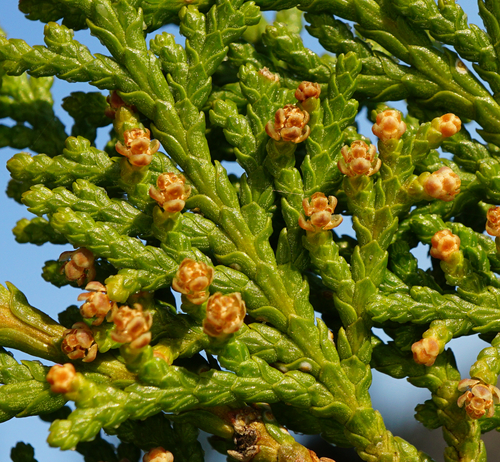
Oriental arborvitae (Chinese thuja) at a glance
| Type | Perennial tree, evergreen |
|---|---|
| Family | Cupressaceae |
| Mature height | 8–18 m (26–59 ft) |
| Mature spread | 3–7 m (10–23 ft) |
| Spacing | 4 m (13 ft) centre to centre |
| Sun | Full sun, at least 6 h of direct sun a day |
| Water | Low; drought tolerance high, waterlogging tolerance none |
| Soil pH | 6–8.5 |
| Cold hardiness | About -30 °C (-22 °F) once established (roughly USDA zone 4) |
| Heat stress | Likely above about 40 °C (104 °F) |
| Wind tolerance | Moderate |
| Pollinator value | None |
| Edible | Not grown as food |
| Native to | Northern and central China |
| Common in gardens of | 🇨🇳 China, 🇺🇸 United States |
Is Oriental arborvitae (Chinese thuja) toxic?
- People: mildly toxic
- Cats: mildly toxic
- Dogs: mildly toxic
- Parts: foliage
Thujone-type oils; stomach upset if chewed.
If a child or pet may have eaten part of a plant, call a poison centre or vet straight away.
Companion planting: what to grow with Oriental arborvitae (Chinese thuja)
No well-documented helpful pairing. Group it with plants that like full sun and low water.
See Oriental arborvitae (Chinese thuja) in a botanical garden
It grows in this sample garden, which you can walk through in 3D:
- China National Botanical Garden (8 plants)
Questions about Oriental arborvitae (Chinese thuja)
- How far apart should I plant Oriental arborvitae (Chinese thuja)?
- About 4 m (13 ft) apart, centre to centre. A mature plant spreads 3–7 m (10–23 ft).
- Does Oriental arborvitae (Chinese thuja) need full sun?
- Full sun: at least 6 hours of direct sun a day.
- How much water does Oriental arborvitae (Chinese thuja) need?
- Low water. Drought tolerance is high and waterlogging tolerance none.
- How cold-hardy is Oriental arborvitae (Chinese thuja)?
- It tolerates about -30 °C (-22 °F) once established, roughly USDA zone 4.
- Is Oriental arborvitae (Chinese thuja) poisonous to cats and dogs?
- For cats it is mildly toxic; for dogs mildly toxic; for people mildly toxic. Thujone-type oils; stomach upset if chewed.
- What grows well with Oriental arborvitae (Chinese thuja)?
- There is no well-documented companion pairing for Oriental arborvitae (Chinese thuja). Group it with plants that like the same sun (full sun) and water (low).
Sources and evidence
Evidence grade B (B: extension service or peer-reviewed).
- Flora of China, Missouri Botanical Garden & Harvard University Herbaria (eFloras)
- Missouri Botanical Garden Plant Finder, Missouri Botanical Garden
Notes and assumptions
- Vertical fans of scale foliage; the cypress of Chinese temple courtyards and imperial tombs (trees over 1,000 years old in Beijing).
Reference values for planning, not horticultural, veterinary or medical advice. Varieties, soils and local climates differ: check with a local nursery or extension service.
Related plants
- Creeping juniper Juniperus horizontalis
- Leyland cypress x Cuprocyparis leylandii
- Hinoki cypress Chamaecyparis obtusa
- Dawn redwood Metasequoia glyptostroboides
- Bald cypress Taxodium distichum
- Eastern red cedar Juniperus virginiana
- Northern white cedar (arborvitae) Thuja occidentalis
- Common juniper Juniperus communis