Allspice (pimento) Pimenta dioica
Allspice (pimento) (Pimenta dioica) is an evergreen perennial tree in the Myrtaceae family, native to Jamaica, the Greater Antilles, southern Mexico and Central America. It grows 6–13 m (20–43 ft) tall and 4–8 m (13–26 ft) wide, wants full sun and moderate water, and is hardy to about 1 °C (34 °F). Space plants about 6 m (20 ft) apart.
Plan Allspice (pimento) in your garden →
Free. Draw your beds, then watch it grow through the year in 2D and 3D.
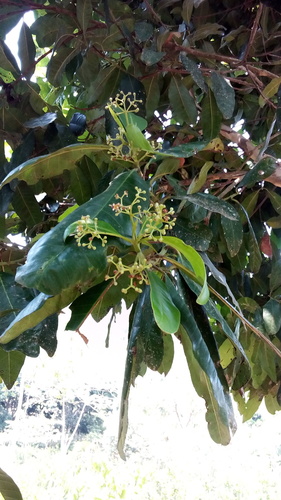
Allspice (pimento) at a glance
| Type | Perennial tree, evergreen |
|---|---|
| Family | Myrtaceae |
| Mature height | 6–13 m (20–43 ft) |
| Mature spread | 4–8 m (13–26 ft) |
| Spacing | 6 m (20 ft) centre to centre |
| Sun | Full sun, at least 6 h of direct sun a day |
| Water | Moderate; drought tolerance low, waterlogging tolerance none |
| Soil pH | 5.5–7.5 |
| Cold hardiness | About 1 °C (34 °F) once established (roughly USDA zone 10) |
| Heat stress | Likely above about 38 °C (100 °F) |
| Flowering | from about April for 3–6 weeks (northern hemisphere; later in cold climates, earlier in warm ones) |
| Wind tolerance | Moderate |
| Pollinator value | High |
| Edible | Yes: dried unripe berries (allspice), leaves (flavouring) |
| Native to | Jamaica, the Greater Antilles, southern Mexico and Central America |
| Common in gardens of | 🇲🇽 Mexico, 🇺🇸 United States, 🇧🇷 Brazil, 🇨🇴 Colombia, 🇮🇳 India, 🇹🇭 Thailand |
Is Allspice (pimento) toxic?
- People: not known to be toxic
- Cats: not known to be toxic
- Dogs: not known to be toxic
Not poisonous; the eugenol-rich oil irritates skin in concentrated form.
If a child or pet may have eaten part of a plant, call a poison centre or vet straight away.
Companion planting: what to grow with Allspice (pimento)
No well-documented helpful pairing. Group it with plants that like full sun and moderate water.
Keep apart or take care
- caution With Guava: Myrtle rust (Austropuccinia psidii) infects guava, feijoa, Surinam cherry and many other Myrtaceae; it spreads by airborne spores between them. Evidence B
Questions about Allspice (pimento)
- How far apart should I plant Allspice (pimento)?
- About 6 m (20 ft) apart, centre to centre. A mature plant spreads 4–8 m (13–26 ft).
- Does Allspice (pimento) need full sun?
- Full sun: at least 6 hours of direct sun a day.
- How much water does Allspice (pimento) need?
- Moderate water. Drought tolerance is low and waterlogging tolerance none.
- How cold-hardy is Allspice (pimento)?
- It tolerates about 1 °C (34 °F) once established, roughly USDA zone 10.
- When does Allspice (pimento) flower?
- From about April for 3–6 weeks (northern hemisphere; later in cold climates, earlier in warm ones).
- Is Allspice (pimento) poisonous to cats and dogs?
- For cats it is not known to be toxic; for dogs not known to be toxic; for people not known to be toxic. Not poisonous; the eugenol-rich oil irritates skin in concentrated form.
- What grows well with Allspice (pimento)?
- There is no well-documented companion pairing for Allspice (pimento). Group it with plants that like the same sun (full sun) and water (moderate).
Sources and evidence
Evidence grade A (A: strong evidence).
- Plants of the World Online (taxonomy, native range), Royal Botanic Gardens, Kew
- UF/IFAS Extension tropical and subtropical fruit and landscape publications, University of Florida
- Fruits of Warm Climates (Morton, 1987), Purdue University NewCROP
Notes and assumptions
- Smooth, peeling grey bark and leathery leaves smelling of clove. Trees are functionally male or female: only females fruit, and they need a male nearby. Jamaica’s pimento walks supply the best spice; the wood smokes Jamaican jerk.
Reference values for planning, not horticultural, veterinary or medical advice. Varieties, soils and local climates differ: check with a local nursery or extension service.
Related plants
- Lemon myrtle Backhousia citriodora
- Guava Psidium guajava
- Feijoa Acca sellowiana
- Surinam cherry (pitanga) Eugenia uniflora
- Cider gum (eucalyptus) Eucalyptus gunnii
- Lilly pilly Syzygium smithii
- Crimson bottlebrush Melaleuca citrina
- Mānuka (tea tree) Leptospermum scoparium