African nightshade (managu) Solanum scabrum
African nightshade (managu) (Solanum scabrum) is an annual vegetable in the Solanaceae family, native to West and Central Africa. It grows 50 cm–1 m (20 in–3.3 ft) tall and 40–60 cm (16–24 in) wide, wants full sun and moderate water, and is hardy to about 8 °C (46 °F). Space plants about 40 cm (16 in) apart.
Plan African nightshade (managu) in your garden →
Free. Draw your beds, then watch it grow through the year in 2D and 3D.
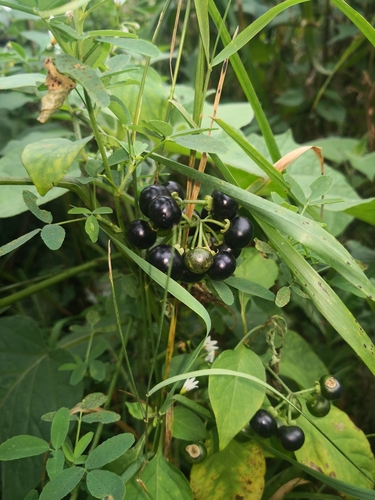
African nightshade (managu) at a glance
| Type | Annual vegetable |
|---|---|
| Family | Solanaceae |
| Mature height | 50 cm–1 m (20 in–3.3 ft) |
| Mature spread | 40–60 cm (16–24 in) |
| Spacing | 40 cm (16 in) centre to centre |
| Sun | Full sun, at least 5 h of direct sun a day |
| Water | Moderate; drought tolerance low, waterlogging tolerance none |
| Soil pH | 5.5–7 |
| Cold hardiness | About 8 °C (46 °F) once established (roughly USDA zone 11) |
| Heat stress | Likely above about 35 °C (95 °F) |
| Flowering | about 6–9 weeks after planting, for 6–11 weeks |
| Days to maturity | About 45 days from planting |
| Wind tolerance | Low |
| Pollinator value | Moderate |
| Edible | Yes: leaves and shoots (cooked) |
| Native to | West and Central Africa |
| Common in gardens of | 🇰🇪 Kenya, 🇳🇬 Nigeria, 🇪🇹 Ethiopia |
Is African nightshade (managu) toxic?
- People: mildly toxic
- Cats: moderately toxic
- Dogs: moderately toxic
- Parts: unripe berries
Unripe berries hold solanine; leaves are cooked before eating.
If a child or pet may have eaten part of a plant, call a poison centre or vet straight away.
Companion planting: what to grow with African nightshade (managu)
No well-documented helpful pairing. Group it with plants that like full sun and moderate water.
Keep apart or take care
- caution With Florence fennel: Fennel releases growth-inhibiting compounds from roots and foliage; lab and garden reports show poorer growth of tomato, pepper and other nearby crops, so keep it in its own corner. Evidence C
- caution With Smoke tree: Smoke tree is very susceptible to Verticillium wilt, which persists in soil after tomato, potato or aubergine crops; avoid planting it where those crops have wilted. Evidence C
- caution With Fennel: Fennel is reported to suppress tomatoes, peppers and many other vegetables nearby; grow it in its own corner. Evidence C
- caution With Nightshades: Nightshades share late blight, early blight, Verticillium wilt and Colorado potato beetle; mix with other families and rotate the bed. Evidence B
- avoid With Potato: Potatoes are the main source of late blight (Phytophthora infestans) that spreads to tomatoes and other nightshades within a few metres. Evidence B
- caution With Sunflower: Sunflower residues and roots release phenolic compounds that can slow nearby seedlings; transplants are less affected. Evidence C
Questions about African nightshade (managu)
- How far apart should I plant African nightshade (managu)?
- About 40 cm (16 in) apart, centre to centre. A mature plant spreads 40–60 cm (16–24 in).
- Does African nightshade (managu) need full sun?
- Full sun: at least 5 hours of direct sun a day.
- How much water does African nightshade (managu) need?
- Moderate water. Drought tolerance is low and waterlogging tolerance none.
- How cold-hardy is African nightshade (managu)?
- It tolerates about 8 °C (46 °F) once established, roughly USDA zone 11. As an annual it is usually planted out after the last frost.
- When does African nightshade (managu) flower?
- About 6–9 weeks after planting, for 6–11 weeks.
- Is African nightshade (managu) poisonous to cats and dogs?
- For cats it is moderately toxic; for dogs moderately toxic; for people mildly toxic. Unripe berries hold solanine; leaves are cooked before eating.
- What grows well with African nightshade (managu)?
- There is no well-documented companion pairing for African nightshade (managu). Group it with plants that like the same sun (full sun) and water (moderate).
Sources and evidence
Evidence grade B (B: extension service or peer-reviewed).
- Traditional African vegetables, World Vegetable Center
- PROTA4U: Plant Resources of Tropical Africa, PROTA Foundation, Wageningen
Notes and assumptions
- A leading “African leafy vegetable” in Kenyan markets; pinch flower buds to keep leaves coming.
Reference values for planning, not horticultural, veterinary or medical advice. Varieties, soils and local climates differ: check with a local nursery or extension service.
Related plants
- Tomato Solanum lycopersicum
- Cherry tomato Solanum lycopersicum var. cerasiforme
- Potato Solanum tuberosum
- Bell pepper Capsicum annuum
- Eggplant (aubergine) Solanum melongena
- Chili pepper Capsicum annuum (hot types)
- Petunia Petunia x hybrida
- Tomatillo Physalis philadelphica